The Psalmists on Solace: 20 Quotes from the Book of Psalms
Published · Updated
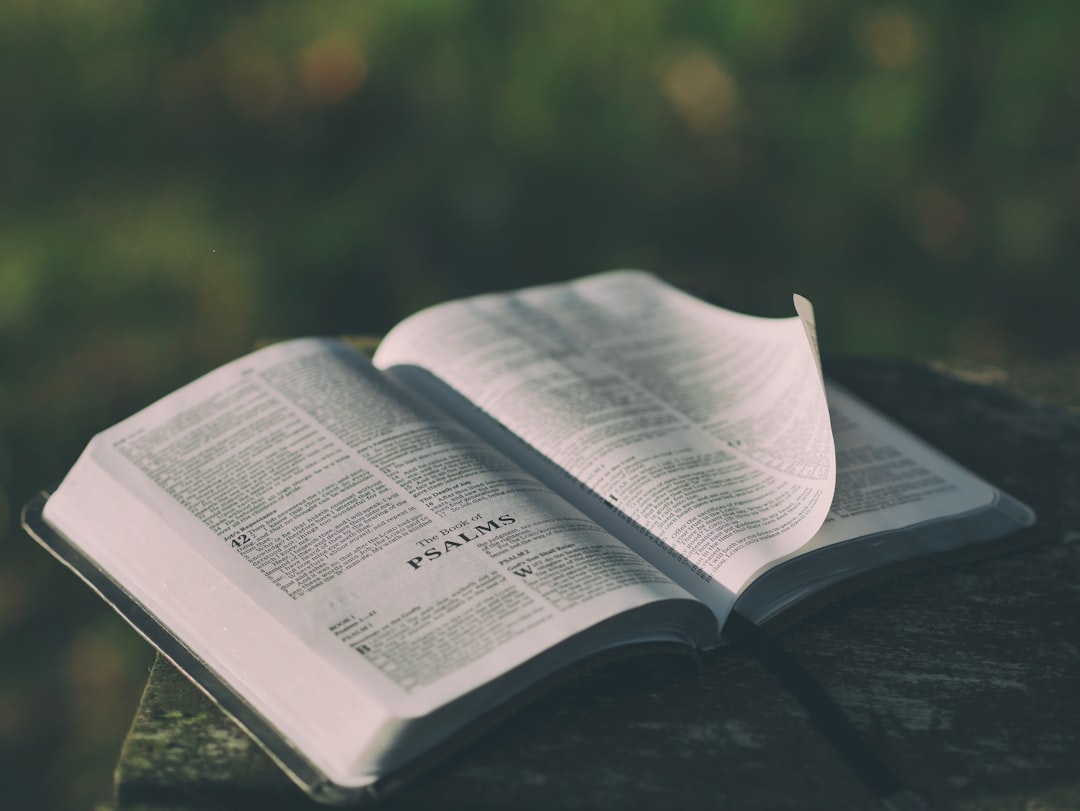
A 1952 edition of the King James Bible sits on a wooden bedside table in an Appalachian cabin, its black leather spine visibly cracked exactly down the middle. This physical wear is intentional. The book naturally falls open to the middle pages, revealing columns of ancient Hebrew poetry translated into early modern English. Generations of readers have pressed their thumbs into these specific margins while navigating grief, seeking direction, or simply waiting for the morning light to break over the ridge. These texts refuse to deal in shallow platitudes. They document everything from crushing despair to ecstatic joy.
The 150 poems comprising this central biblical book were composed by multiple authors over roughly a millennium, with traditions attributing many to King David around 1000 BCE. Readers turning to these verses often find themselves establishing a grounded dawn routine before the noise of the contemporary world intrudes. They demand absolute historical honesty.
What makes the Book of Psalms so emotionally resonant?
The Psalms resonate because they validate the full spectrum of human emotion without rushing to resolve the tension. Unlike didactic texts that merely instruct, these poems give voice to actual suffering, anger, and profound gratitude. They act as a mirror for the reader's own internal landscape, proving that ancient people wrestled with the exact same fears and doubts that plague us today. The historical record remains unflinching.
"The Lord is my shepherd; I shall not want. He maketh me to lie down in green pastures: he leadeth me beside the still waters." — Psalm 23:1-2
"God is our refuge and strength, a very present help in trouble. Therefore will not we fear, though the earth be removed, and though the mountains be carried into the midst of the sea." — Psalm 46:1-2
"He healeth the broken in heart, and bindeth up their wounds." — Psalm 147:3
"Yea, though I walk through the valley of the shadow of death, I will fear no evil: for thou art with me; thy rod and thy staff they comfort me." — Psalm 23:4
"Cast thy burden upon the Lord, and he shall sustain thee: he shall never suffer the righteous to be moved." — Psalm 55:22
How did ancient writers express despair and hope?
Lament forms the largest single category within the Psalter, demonstrating that questioning the divine was considered a valid form of worship. These writers did not suppress their anguish when facing political exile or personal betrayal. They cried out into the void, demanding answers, before eventually pivoting toward a fragile, hard-won hope that transcends immediate circumstances. Exile forced their hand.
This pivot is not unlike how Hemingway articulated resilience under pressure during the brutal conflicts of the twentieth century. Finding the vocabulary for pain is the first step toward enduring it. The psalmists mastered this vocabulary completely.
"Why art thou cast down, O my soul? and why art thou disquieted within me? hope thou in God: for I shall yet praise him, who is the health of my countenance, and my God." — Psalm 42:11
"Out of the depths have I cried unto thee, O Lord. Lord, hear my voice: let thine ears be attentive to the voice of my supplications." — Psalm 130:1-2
"My flesh and my heart faileth: but God is the strength of my heart, and my portion for ever." — Psalm 73:26
"Weeping may endure for a night, but joy cometh in the morning." — Psalm 30:5
"I waited patiently for the Lord; and he inclined unto me, and heard my cry. He brought me up also out of an horrible pit, out of the miry clay, and set my feet upon a rock, and established my goings." — Psalm 40:1-2
What do the Psalms reveal about gratitude and wonder?
Gratitude in ancient Hebrew poetry extends far beyond simple thankfulness for material blessings. The psalmists frequently express profound awe at the architecture of the cosmos and the intricate design of the natural world. This deep appreciation for creation frames human existence as both remarkably fragile and deeply significant within the broader theater of the universe. The nighttime sky provided their primary theological canvas.
Such reflections often parallel Chesterton's perspective on maintaining wonder in an increasingly cynical age. Modern readers desperately need this scale.
"When I consider thy heavens, the work of thy fingers, the moon and the stars, which thou hast ordained; What is man, that thou art mindful of him? and the son of man, that thou visitest him?" — Psalm 8:3-4
"I will praise thee; for I am fearfully and wonderfully made: marvellous are thy works; and that my soul knoweth right well." — Psalm 139:14
"The heavens declare the glory of God; and the firmament sheweth his handywork." — Psalm 19:1
"O taste and see that the Lord is good: blessed is the man that trusteth in him." — Psalm 34:8
"Enter into his gates with thanksgiving, and into his courts with praise: be thankful unto him, and bless his name." — Psalm 100:4
How can these verses apply to modern transitions?
Navigating major life shifts requires an anchor that remains steady when external circumstances fluctuate wildly. The Psalms offer a vocabulary for transition, reminding readers that historical figures faced exile, war, and the rebuilding of their entire societies. Their words provide a historical framework for processing fear and uncertainty during our own periods of profound personal change. Babylonian captivity reshaped their entire theology.
Readers often seek out words for those starting fresh to find their footing. The ancient poets understood this need intimately. They knew that courage is rarely forged in comfort. Even when exploring broader motivational literature, few texts match the raw staying power of these ancient songs. The men who composed these lines wrote them while hiding in actual caves, fleeing from political enemies, and watching their kingdoms splinter into irrecoverable factions.
"Thy word is a lamp unto my feet, and a light unto my path." — Psalm 119:105
"The Lord is my light and my salvation; whom shall I fear? the Lord is the strength of my life; of whom shall I be afraid?" — Psalm 27:1
"He that dwelleth in the secret place of the most High shall abide under the shadow of the Almighty." — Psalm 91:1
"Search me, O God, and know my heart: try me, and know my thoughts: And see if there be any wicked way in me, and lead me in the way everlasting." — Psalm 139:23-24
"Let the words of my mouth, and the meditation of my heart, be acceptable in thy sight, O Lord, my strength, and my redeemer." — Psalm 19:14
Frequently Asked Questions
Who wrote the Book of Psalms?
While tradition heavily associates the collection with King David, who is credited with 73 of the 150 poems, the book is actually an anthology by multiple authors. Other named contributors include Asaph, the sons of Korah, Solomon, and even Moses, with many remaining anonymous.
What is the primary purpose of these texts?
Originally, these were the liturgical songs and prayers of ancient Israel, used in public worship at the temple in Jerusalem and in private devotion. They functioned as a hymnal, offering a prescribed, communal way to address the divine during festivals, times of national crisis, and individual hardship.
Why are the Psalms divided into five books?
Scholars believe the five-part division (Books I-V) was intentionally structured by post-exilic editors to mirror the five books of the Torah (Genesis through Deuteronomy). This arrangement suggests that just as God provided instruction to the people, the people now have a comprehensive, structured response back to God.
The cracked spine of that 1952 Bible in the Appalachian cabin tells a story of reliance. When the ink fades and the leather wears thin, the text itself remains a sturdy place to stand.