What Did Shakespeare Actually Say About Human Nature? 25 Sourced Original Quotes
Published
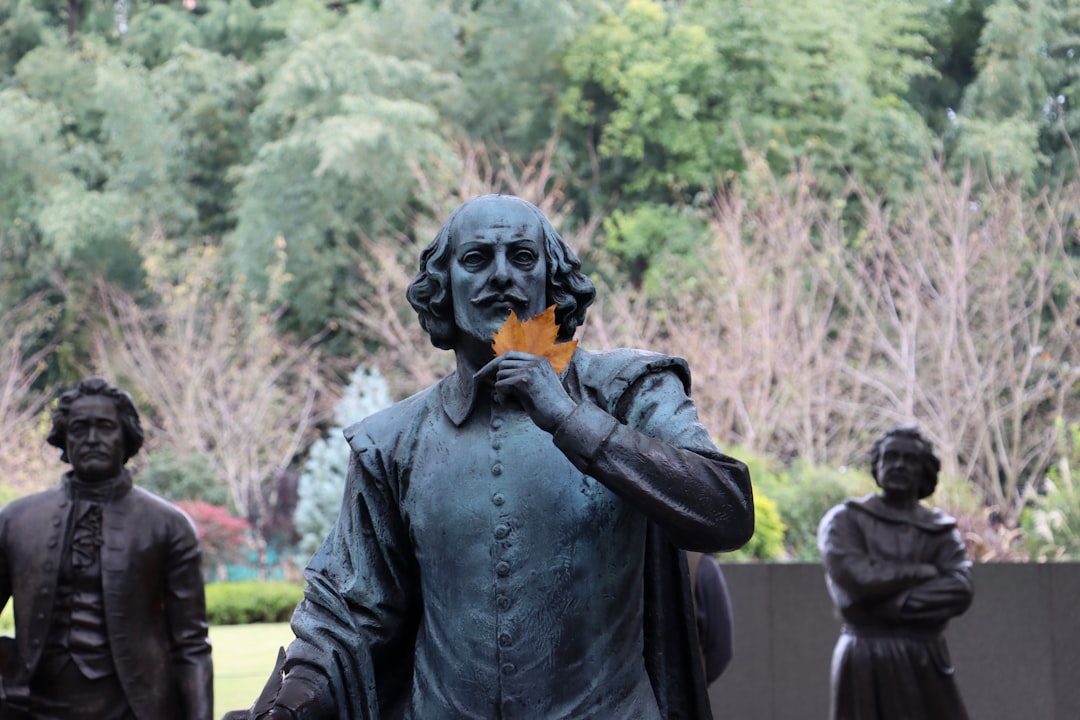
High school English classes often frame the Bard as an impenetrable wall of early modern English syntax meant only for aristocrats and dusty academics. Teachers force teenagers to memorize iambic pentameter without ever mentioning the sheer volume of dirty jokes, bloody sword fights, and political treason baked into the texts. The traditional curriculum sanitizes a writer who was fundamentally operating in a gritty, high-stakes entertainment industry.
That dusty pedestal completely ignores the reality of his actual audience and the chaotic environment of Elizabethan London. When Richard Burbage first stepped onto the newly built stage of the Globe Theatre in 1599, he was playing to working-class groundlings who threw hazelnut shells and demanded immediate emotional payoffs. If we could sit down with the working playwright today, stripping away the centuries of academic reverence, what would he actually say about the human condition? Let us treat his canon as a transcript, posing our modern anxieties to the Stratford man himself through the voices of his most famous characters.
On Ambition
We begin by asking the playwright about the destructive nature of unchecked desire, a theme he returned to repeatedly during King James I's paranoid reign. He offers the perspective of a Scottish lord standing on the precipice of treason.
I have no spur to prick the sides of my intent, but only vaulting ambition, which o'erleaps itself and falls on the other.
This admission from the bloody tragedy highlights the self-defeating mechanics of greed. The metaphor of a rider jumping too high and crashing perfectly captures the inevitable ruin of corporate climbers and political tyrants alike.
A closer look at how unchecked desire ruins royal lives lives in macbeths descent into violent tyranny.
When questioned about how politicians manipulate the masses to gain power, he points to the streets of ancient Rome. A conspirator in the Roman senate explains the cynical trajectory of leadership.
Lowliness is young ambition's ladder, whereto the climber-upward turns his face; but when he once attains the upmost round, he then unto the ladder turns his back.
Brutus recognizes that humility is almost always a temporary performance used to secure votes or loyalty. Once the summit is reached, the powerful conveniently forget the ordinary citizens who elevated them to the top.
Pressing him on whether power is ever actually worth the moral cost, he channels a disgraced cardinal from his late historical plays. Thomas Wolsey reflects on his spectacular fall from grace in the court of Henry VIII.
Fling away ambition: by that sin fell the angels; how can man, then, the image of his Maker, hope to win by it?
The fallen advisor strips away the glamour of political influence, revealing it as a spiritual poison. It is a stark warning that tying your self-worth to professional advancement usually ends in bitter exile.
We ask if ambition is entirely meaningless, a mere illusion of progress. A grieving Danish prince offers a deeply cynical perspective on human striving.
A dream itself is but a shadow.
Hamlet dismisses the grand designs of humanity as nothing more than vaporous illusions. The prince understands that our desperate attempts to leave a legacy are ultimately erased by the relentless march of time.
On Love and Folly
Transitioning to matters of the heart, we ask why romance is always so incredibly complicated. He smiles and gestures toward a magical forest outside Athens.
The course of true love never did run smooth.
Lysander delivers this iconic observation just before fleeing into the woods with Hermia. The playwright insists that friction is not a sign of failure, but rather the mandatory entry fee for any genuine partnership.
Other authors tackling romance can be found in our collection of resonant literary passages.
We wonder why intelligent people make such terrible decisions when infatuated. A court jester from a pastoral comedy provides the answer with devastating clarity.
The fool doth think he is wise, but the wise man knows himself to be a fool.
Touchstone the clown cuts through the intellectual vanity of the aristocrats surrounding him. Recognizing your own capacity for profound stupidity is the first actual step toward emotional maturity.
When asked about the danger of moving too fast in a new relationship, he recalls the doomed teenagers of Verona. A well-meaning friar tries to slow down a catastrophic elopement.
These violent delights have violent ends and in their triumph die, like fire and powder, which as they kiss consume.
Friar Laurence accurately diagnoses the fatal flaw of obsessive infatuation. Passion that burns too hot inevitably incinerates both the lovers and the community that surrounds them.
We ask what feeds this kind of obsessive romantic melancholia. A lovesick duke in Illyria demands that his musicians keep playing.
If music be the food of love, play on; give me excess of it, that, surfeiting, the appetite may sicken, and so die.
Duke Orsino is not actually in love with a woman, but rather addicted to the dramatic feeling of being in love. The playwright mocks our tendency to wallow in our own curated romantic suffering.
Finally, we ask what genuine devotion actually sounds like when stripped of poetry. A witty woman in Messina drops her defensive irony for just a moment.
I love you with so much of my heart that none is left to protest.
Beatrice abandons her trademark sarcasm to deliver a stunningly direct confession to Benedick. True vulnerability requires putting down the verbal weapons we use to protect our fragile egos.
On Grief and Loss
The conversation turns darker as we ask how humans are supposed to process devastating tragedy. He recalls a Scottish nobleman who has just received news of his slaughtered family.
Give sorrow words; the grief that does not speak whispers the o'er-fraught heart and bids it break.
Malcolm urges Macduff to vocalize his agony rather than internalizing it. The playwright understood centuries before modern therapy that repressed trauma physically destroys the human body from the inside out.
For more on how authors process pain, browse these memoir excerpts detailing human survival.
We ask him to describe the physical sensation of losing a child, a pain he knew personally after the death of his eleven-year-old son Hamnet in 1596. A grieving mother in a lesser-known history play provides the harrowing answer.
Grief fills the room up of my absent child, lies in his bed, walks up and down with me.
Constance articulates how mourning becomes a living, breathing entity that occupies the physical space left behind. The absence itself becomes a heavy, suffocating presence that shadows every daily routine.
We question why bad news always seems to arrive all at once. A corrupt king nervously watches his court unravel.
When sorrows come, they come not single spies, but in battalions.
Claudius recognizes the terrifying momentum of disaster once a crisis begins. Misfortune rarely politely spaces itself out, preferring instead to overwhelm us through sheer, brutal accumulation.
When asked if anyone can truly understand another person's suffering, he offers a cynical retort from a man watching his friend unravel.
Everyone can master a grief but he that has it.
Leonato points out the sheer uselessness of outside advice when you are the one standing in the center of the storm. It is remarkably easy to preach resilience when your own life is completely intact.
On the Passage of Time
We pivot to the relentless anxiety of aging and ask how he coped with his own mortality. He recites a line from a private sonnet circulated among his close friends.
When I do count the clock that tells the time, and see the brave day sunk in hideous night.
The speaker obsesses over the mechanical ticking of the clock, watching beauty inevitably decay into darkness. Time is not a gentle river, but a hostile force actively dismantling everything we build.
Eastern poets also wrestled with time's cruelty, as seen in these classical verses on mortal existence.
We ask what life looks like when all hope and purpose have been completely stripped away. A defeated tyrant delivers the most famous nihilistic monologue in the English language.
Tomorrow, and tomorrow, and tomorrow, creeps in this petty pace from day to day, to the last syllable of recorded time.
Macbeth realizes that his bloody campaign for the crown has rendered his existence entirely meaningless. Stripped of moral context, the future is just an exhausting, repetitive march toward the grave.
Questioning him on the agony of regret, he summons an imprisoned, deposed king waiting for his assassins.
I wasted time, and now doth time waste me.
Richard II finally understands the consequences of his careless, arrogant youth as he rots in a dungeon. The squandered hours of our past eventually return to collect their terrible debts.
We ask if there is a specific age that causes the most trouble for society. An exhausted shepherd in a late romance offers a very specific complaint.
I would there were no age between ten and three-and-twenty, or that youth would sleep out the rest.
The old man wishes teenagers could simply be put into hibernation until they develop fully functional frontal lobes. It is a hilariously accurate assessment of the chaos generated by impulsive youth.
On Human Nature and Deception
We ask him how we can spot terrible people when they hide behind polite society. A furious prince writes a reminder to himself in a pocket notebook.
That one may smile, and smile, and be a villain.
Hamlet is horrified by the realization that pure evil does not always look monstrous on the outside. The most dangerous predators in society usually wear expensive clothes and possess excellent table manners.
Expand your search for truth through our broader archive of spoken wisdom.
We inquire about how people justify their own terrible behavior when confronted. An aging king screaming at a thunderstorm provides the template for eternal victimhood.
I am a man more sinned against than sinning.
King Lear completely ignores his own tyrannical foolishness, choosing instead to focus entirely on how terribly others have treated him. We possess a terrifying capacity to rewrite our own narratives to avoid accountability.
Asking for a reliable rule to navigate a world full of liars, he points to a cryptic riddle hidden inside a golden casket.
All that glisters is not gold; often have you heard that told.
The Prince of Morocco reads this brutal rejection letter after choosing the flashiest, most superficial option. The playwright insists that true value is rarely found in the loudest, most decorative packaging.
We ask what absolute sociopathy looks like when it finally stops pretending. A jealous ensign reveals his true nature to the audience while destroying his general's life.
I am not what I am.
Iago proudly declares his total lack of a fixed moral center. He is a terrifying void of a human being, entirely willing to reshape his personality to inflict maximum psychological damage on his targets.
On Fate and Agency
For our final topic, we ask if we are actually in control of our own destinies. A Roman conspirator argues passionately for human agency against the backdrop of an empire.
The fault, dear Brutus, is not in our stars, but in ourselves, that we are underlings.
Cassius rejects the idea of astrological determinism, insisting that political oppression is a choice, not a mandate from heaven. We are entirely responsible for the chains we refuse to break.
Finding peace with your circumstances often requires practicing active thankfulness daily.
We ask for the counterargument, the feeling that the universe is actively hostile. A blinded nobleman stumbling through a wasteland offers a deeply pessimistic view of the gods.
As flies to wanton boys, are we to the gods; they kill us for their sport.
Gloucester voices the terrifying suspicion that the universe is not just indifferent, but actively cruel. Sometimes, catastrophic suffering has no grand purpose other than cosmic entertainment.
Seeking a middle ground, we ask if there is any underlying order to the chaos. A prince who has survived pirates and poisonings reflects on his miraculous survival.
There's a divinity that shapes our ends, rough-hew them how we will.
Hamlet accepts that while we can make our own clumsy plans, some larger architectural force ultimately determines the final outcome. It is a quiet surrender to the limits of human control.
We ask him for a final thought on the nature of existence itself before he leaves. A retiring magician, standing on an enchanted island, breaks his staff and dismisses his spirits.
We are such stuff as dreams are made on, and our little life is rounded with a sleep.
Prospero acknowledges the profound fragility and fleeting nature of everything we build, write, and love. The theatrical illusion must eventually end, and the stage must be struck for good.
The dialogue fades, leaving us with the printed pages compiled by John Heminges and Henry Condell in the First Folio of 1623. The playwright does not offer neat moral resolutions or simple formulas for a successful life. He simply reflects the magnificent, terrifying reality of human behavior back at us, demanding that we look at the mess without flinching.