50 Short Life Quotes That Will Ground Your Perspective
Published · Last updated
A few precise words from historical thinkers and modern writers can instantly reframe a difficult afternoon and offer immediate mental clarity.
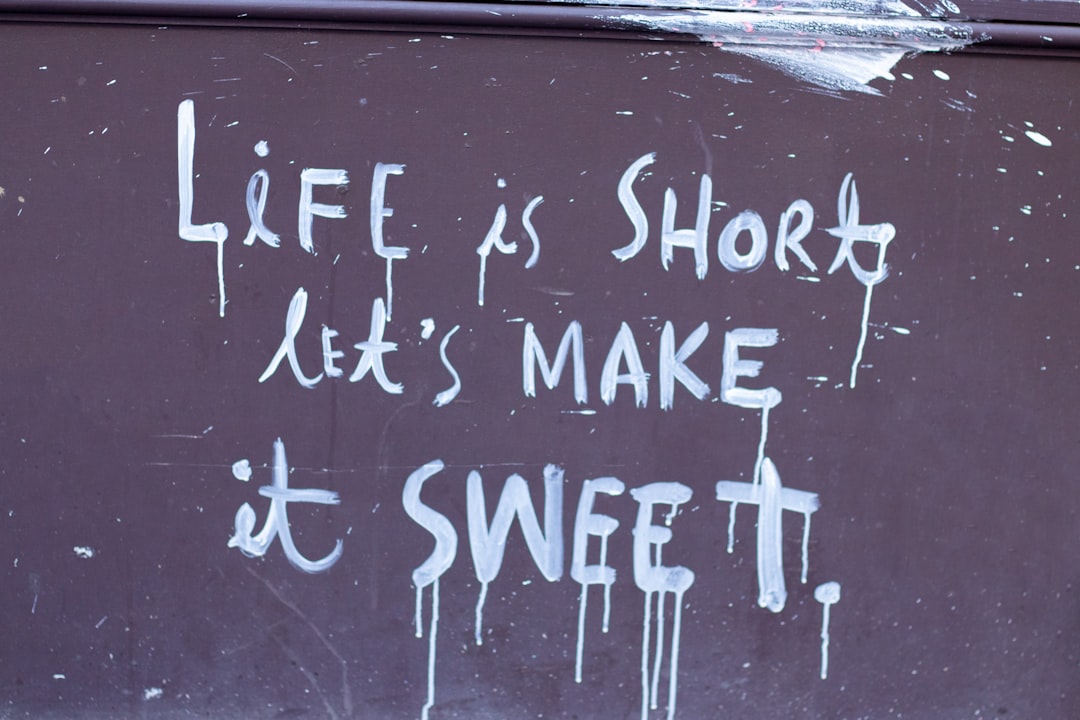
When Viktor Frankl finalized the manuscript for Man's Search for Meaning in 1946 after enduring the profound horrors of Theresienstadt and Auschwitz, he documented a profound psychological reality. He realized that human survival often hinges on a single, crystallized thought held tightly against the chaos of an unpredictable world. Massive philosophical treatises rarely provide immediate comfort during a sudden afternoon crisis. A handful of specific syllables can rapidly reorient a spiraling mind. Brevity cuts through noise.
What did early philosophers say about resilience?
Ancient thinkers did not possess modern psychological terminology, but they expertly diagnosed the exact emotional fractures we experience today. Stoicism and early Greek logic prioritized stripping away excess emotion to locate the bare truth of a given situation. When you examine how these historical figures articulated human struggle, their brevity stands out as a deliberate rhetorical choice designed for rapid mental retrieval. These ancient maxims function as a vital subset of everyday everyday quotes meant for practical daily application. They demanded action over endless rumination.
"We suffer more often in imagination than in reality." – Seneca
"The best revenge is to be unlike him who performed the injury." – Marcus Aurelius
"To be evenminded is the greatest virtue." – Heraclitus
"No man steps in the same river twice." – Heraclitus
"He who has a why to live for can bear almost any how." – Friedrich Nietzsche
"The obstacle is the path." – Zen Proverb
"Knowing yourself is the beginning of all wisdom." – Aristotle
"I cannot teach anybody anything. I can only make them think." – Socrates
"We are what we repeatedly do." – Will Durant
While frequently attributed to Aristotle across the internet, this famous summary actually belongs to historian Will Durant in his 1926 book The Story of Philosophy.
"There is only one good, knowledge, and one evil, ignorance." – Socrates
"Difficulties strengthen the mind, as labor does the body." – Seneca
"Wealth consists not in having great possessions, but in having few wants." – Epictetus
Related: how students handle academic stress
Short quotes on purpose and action
Moving from theoretical endurance to forward momentum requires a completely different kind of linguistic catalyst. Politicians, activists, and artists throughout the nineteenth and twentieth centuries utilized punchy aphorisms to rally crowds and sustain their own creative energy during grueling projects. A direct command strips away the luxury of hesitation. If you are struggling with procrastination or navigating the anxiety of starting over, a sharply worded imperative from a historical leader can jumpstart your stalled engine. Immediate action generates necessary clarity.
"Action is the foundational key to all success." – Pablo Picasso
"To do two things at once is to do neither." – Publilius Syrus
"Whatever you are, be a good one." – Abraham Lincoln
This popular imperative is heavily disputed by historians, with many scholars tracing its true origin to the writings of William Makepeace Thackeray.
"Do what you can, with what you have, where you are." – Theodore Roosevelt
"Be the change that you wish to see in the world." – Arleen Lorrance
"It is never too late to be what you might have been." – George Eliot
"Turn your wounds into wisdom." – Oprah Winfrey
"Everything you can imagine is real." – Pablo Picasso
"Simplicity is the ultimate sophistication." – Clare Boothe Luce
"Tough times never last, but tough people do." – Robert H. Schuller
"Determine never to be idle." – Thomas Jefferson
"Make each day your masterpiece." – John Wooden
"Light tomorrow with today." – Elizabeth Barrett Browning
Related: motivational quotes
How do modern writers capture the essence of living?
Literature offers a unique reservoir of concise wisdom because novelists and poets spend their entire careers distilling complex human emotions into the tightest possible framing. When an author strikes the perfect balance of nouns and verbs, the resulting sentence can detach from its original narrative context and survive for decades on its own standalone merits. Hemingway faced adversity in his own life and channeled that grit into his dialogue, while poets like Sylvia Plath turned intense internal observation into unforgettable imagery. The best sentences survive their authors.
"And so it goes." – Kurt Vonnegut
"Not all those who wander are lost." – J.R.R. Tolkien
"There is a crack in everything, that's how the light gets in." – Leonard Cohen
"The world breaks everyone, and afterward, some are strong at the broken places." – Ernest Hemingway
"I am no bird; and no net ensnares me." – Charlotte Brontë
"I took a deep breath and listened to the old brag of my heart." – Sylvia Plath
"Beware; for I am fearless, and therefore powerful." – Mary Shelley
"Isn't it nice to think that tomorrow is a new day with no mistakes in it yet?" – L.M. Montgomery
"A bird doesn't sing because it has an answer, it sings because it has a song." – Maya Angelou
"I dwell in possibility." – Emily Dickinson
"The only way out is through." – Robert Frost
"We must be our own before we can be another’s." – Ralph Waldo Emerson
"Life shrinks or expands in proportion to one's courage." – Anaïs Nin
Related: challenging comfortable worldviews
Brief life quotes for daily perspective
Sometimes the most effective mental reset comes from anonymous proverbs or casual observations made by cultural icons outside of formal written manuscripts. The sheer speed of modern culture demands reminders that are compact enough to fit on a sticky note but heavy enough to anchor a distracted and scattered brain. You do not always need a profound metaphysical breakthrough to improve your afternoon. A sharp sentence breaks the tension.
"Every moment is a fresh beginning." – T.S. Eliot
"Die with memories, not dreams." – Unknown
"Aspire to inspire before we expire." – Unknown
"Embrace the glorious mess that you are." – Elizabeth Gilbert
"Normality is a paved road: it's comfortable to walk, but no flowers grow on it." – Vincent van Gogh
"The purpose of our lives is to be happy." – Dalai Lama
"Life is what happens when you're busy making other plans." – John Lennon
"You only live once, but if you do it right, once is enough." – Mae West
"Get busy living or get busy dying." – Stephen King
"If you want to live a happy life, tie it to a goal, not to people or things." – Albert Einstein
"Never let the fear of striking out keep you from playing the game." – Babe Ruth
"The unexamined life is not worth living." – Socrates
The human brain naturally latches onto rhythmic, concise language when navigating periods of extreme stress or overwhelming joy. By memorizing a handful of these brief statements, you effectively install a psychological circuit breaker that can rapidly interrupt negative thought spirals before they completely derail your entire afternoon. Let these tightly wound sentences sit quietly in your consciousness. Words carry weight. The right combination of nouns and verbs will eventually surface precisely when your environment demands a grounded, resilient response.
Key Takeaways
- Brevity enhances memory retention during moments of acute emotional distress or sudden anxiety.
- Philosophical maxims were originally designed as practical tools for immediate behavioral correction, not just theoretical study.
- Disputed attributions frequently occur with famous aphorisms, but the core utility of the sentence remains intact regardless of the actual speaker.
- Integrating a single, concrete thought into your morning routine establishes a reliable mental baseline for the hours ahead.