Why We Borrow Quotes About Grief When Our Own Language Fails
Published
The human brain struggles to articulate profound loss, making borrowed language from writers and thinkers a necessary bridge during the hardest days.
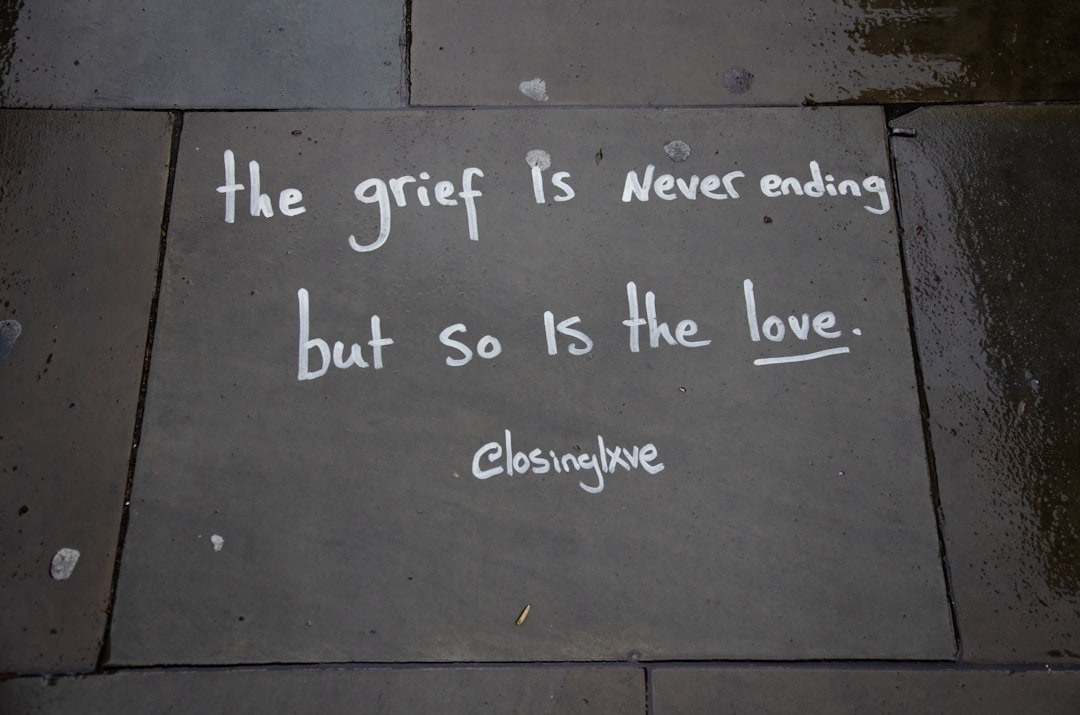
Why do we suddenly turn to the words of dead poets when someone we love stops breathing? What is it about profound loss that strips away our own vocabulary, leaving us desperately searching for a sentence that fits the shape of the void?
The human brain under extreme stress actively shuts down its language centers. When the shock of a funeral or the silence of an empty house hits, our cognitive ability to articulate complex emotional states fractures. We borrow language because we literally cannot produce it ourselves. This is not a failure of imagination. It is a biological necessity.
The Myth of the Perfect Condolence
Society insists that there is a right thing to say when a tragedy occurs. This expectation paralyzes people, turning the act of writing a sympathy card into an agonizing exercise in drafting and deleting. The reality is that no combination of syllables will reverse a death or erase the physical ache of absence. In 1961, C.S. Lewis published A Grief Observed under a pseudonym, meticulously documenting the messy, unpoetic reality of losing his wife Joy Davidman. His journals proved that even a master of English literature found his own vocabulary entirely inadequate when facing the abyss. We do not need a flawless sentence. We just need proof that someone else survived this exact feeling.
Often, finding words that break the silence matters far more than composing a literary masterpiece. People who are mourning rarely remember the exact phrasing used by their visitors in the receiving line. They remember who showed up and who was willing to sit in the quiet without forcing a silver lining onto the situation.
The Reality of Borrowed Language as Scaffolding
What actually helps during the initial weeks of bereavement is structural support for the mind. They provide scaffolding. When Joan Didion wrote The Year of Magical Thinking in 2005 following the sudden cardiac arrest of John Gregory Dunne, she gave millions of readers a framework for the bizarre cognitive distortions that accompany sudden loss. Her specific articulation of expecting her husband to return for his shoes became a touchstone for widows worldwide.
While exploring historical quotes, we frequently notice how writers across centuries describe the exact same physical sensation of a hollow chest. This shared documentation proves that the terrifying physical symptoms of mourning are universal. Reading a centuries-old text that perfectly describes your current Tuesday afternoon panic attack lowers the heart rate. It categorizes an isolating experience into a known human condition.
Documenting the Anatomy of Loss Through Literature
Authors and playwrights have historically served as the designated record keepers for human suffering. They process the raw data of tragedy and refine it into digestible observations.
"No one ever told me that grief felt so like fear." — C.S. Lewis
Lewis captured the adrenaline spike that accompanies a major loss. The body reacts to the absence of a loved one as if it is under physical threat, keeping the nervous system locked in a state of high alert.
"Give sorrow words; the grief that does not speak knits up the o'er-wrought heart and bids it break." — William Shakespeare
Looking at Shakespeare's observations on the human condition in his 1606 tragedy Macbeth, we see a clinical understanding of how repressed emotion destroys the body. He recognized the psychosomatic toll of silence centuries before modern psychology mapped the connection between trauma and physical illness.
"Grief turns out to be a place none of us know until we reach it." — Joan Didion
Didion framed bereavement not as an emotion, but as a geographic location. This spatial metaphor accurately reflects the disorientation mourners feel when they realize the world they previously inhabited no longer exists.
"What we have once enjoyed deeply we can never lose. All that we love deeply becomes a part of us." — Helen Keller
Keller offered a mechanism for integration rather than "moving on." The concept of absorbing the lost person into one's own identity provides a sustainable way to carry the weight forward over decades.
Further reading
- Examine how Hemingway handled fear under pressure during his most difficult years.
- Consider the practical steps for navigating the terrain of starting over after a major life disruption.
- Browse broader sources of motivational quotes to rebuild daily routines.
Frequently Asked Questions
Why do certain grief quotes become viral misattributions?
People prioritize the emotional resonance of a phrase over its historical accuracy. The famous line about grief being "love with nowhere to go" is frequently attributed to everyone from ancient philosophers to modern pop stars, but it actually originated with British theater director Jamie Anderson in a 2014 online post.
Is it appropriate to use a famous quote in a eulogy?
Yes. A well-chosen excerpt from a recognized author provides a shared cultural touchstone for the audience. It anchors the speaker when their voice might otherwise waver during a public address.
How long does the acute phase of needing these external words last?
The timeline varies wildly depending on the individual and the nature of the loss. Some people keep a specific poem folded in their wallet for decades, while others only rely on borrowed language during the immediate logistical chaos of the first month.
The heavy fog of bereavement eventually thins out, allowing normal cognitive functions to resume. As you move into the upcoming week, you might notice your own vocabulary slowly returning to you in quiet moments. Until your own sentences fully reconstruct themselves, relying on the documented survival of others remains a perfectly valid way to navigate the morning.