30 Motivational Quotes for Success That Will Disrupt Your Complacency
Published · Last updated
A single sentence from a battle-tested founder often cuts through the noise of hustle culture faster than any generic productivity advice.
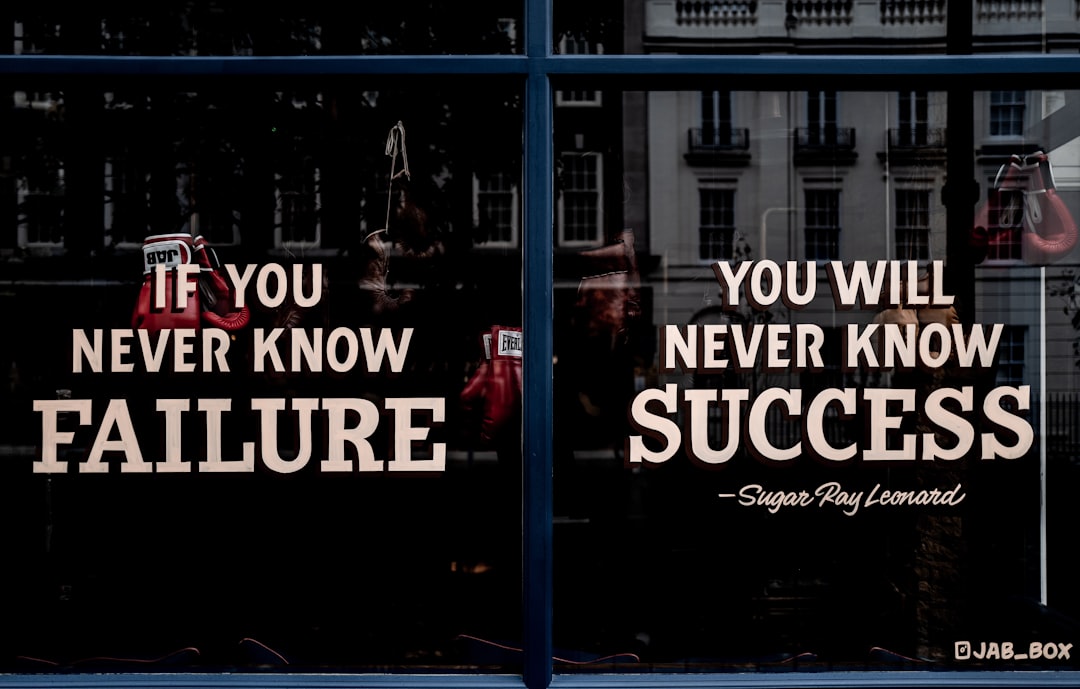
Modern productivity gurus frequently frame success as a purely arithmetic equation where waking up at four in the morning and drinking green juice inevitably equals global market dominance. This math rarely holds. Real achievement demands a tolerance for chaos that no color-coded calendar can actually schedule. Instead of a clean upward line, building a business or mastering a craft involves staggering periods of mundane repetition interspersed with absolute panic. Structure alone cannot shield a founder from the psychological toll of a failed product launch.
Those who actually alter their industries rarely rely on cheap adrenaline. They develop a calloused resilience by studying the inevitable disasters of the people who walked the path before them. When the initial excitement of a new venture burns off, relying on the documented survival tactics of historical heavyweights provides a necessary anchor. A well-timed realization from an inventor or an athlete serves as a stark reminder that the current obstacle is entirely ordinary.
What did early pioneers say about persistence?
Early inventors and industrialists viewed failure not as a moral defect but as a necessary data collection process. When Thomas Edison tested thousands of filament materials in his Menlo Park laboratory during 1879, he treated each burned-out bulb as a mechanical stepping stone rather than a personal defeat. This analytical detachment remains crucial for anyone facing systemic rejection.
"I have not failed. I've just found 10,000 ways that won't work."
Attributed to Thomas Edison during his 1879 incandescent light bulb experiments.
"Failure is simply the opportunity to begin again, this time more intelligently."
Henry Ford
"If we all worked on the assumption that what is accepted as true is really true, there would be little hope of advance."
Orville Wright
"When one door closes, another opens; but we often look so long and so regretfully upon the closed door that we do not see the one which has opened for us."
Alexander Graham Bell
"Nothing in life is to be feared, it is only to be understood. Now is the time to understand more, so that we may fear less."
Marie Curie
"People who are unable to motivate themselves must be content with mediocrity, no matter how impressive their other talents."
Andrew Carnegie
Related: how Edison framed his notorious laboratory setbacks
Redefining failure on the path to achievement
Setbacks carry a specific sting. When Winston Churchill faced the immense political wilderness of the 1930s before his recall to power, he understood that public defeat requires a private recalibration of one's fundamental purpose. A lost election or a bankrupt company forces a leader to separate their core identity from their immediate professional output.
"Success consists of going from failure to failure without loss of enthusiasm."
Often attributed to Winston Churchill, though some historians suggest the phrasing evolved from earlier aphorisms.
"It is hard to fail, but it is worse never to have tried to succeed."
Theodore Roosevelt, from his 1899 speech "The Strenuous Life" delivered in Chicago.
"Success is to be measured not so much by the position that one has reached in life as by the obstacles which he has overcome."
Booker T. Washington, published in his 1901 autobiography Up from Slavery.
"Character cannot be developed in ease and quiet. Only through experience of trial and suffering can the soul be strengthened, ambition inspired, and success achieved."
Helen Keller
"Our greatest glory is not in never failing, but in rising up every time we fail."
Ralph Waldo Emerson
"Ninety-nine percent of the failures come from people who have the habit of making excuses."
George Washington Carver
Related: strategies for maintaining forward momentum
How do athletes handle the pressure of expectation?
Professional competitors operate in an environment where their physical limitations and tactical errors are broadcast to millions of spectators in real time. Boxing champions and basketball icons alike build mental frameworks that isolate them from crowd noise, allowing them to focus entirely on the mechanics of their immediate physical execution. The arena demands total presence.
"I hated every minute of training, but I said, 'Don't quit. Suffer now and live the rest of your life as a champion.'"
Muhammad Ali
"I've missed more than 9,000 shots in my career. I've lost almost 300 games. Twenty-six times, I've been trusted to take the game winning shot and missed. I've failed over and over and over again in my life. And that is why I succeed."
Michael Jordan, featured in his iconic 1997 Nike television commercial.
"Discipline is doing what you hate to do, but nonetheless doing it like you love it."
Mike Tyson
"Champions keep playing until they get it right."
Billie Jean King
"The difference between a successful person and others is not a lack of strength, not a lack of knowledge, but rather a lack in will."
Vince Lombardi
"Success is no accident. It is hard work, perseverance, learning, studying, sacrifice and most of all, love of what you are doing or learning to do."
Pelé
Related: early perspectives on discipline in the ring
Literary perspectives on ambition and grit
Novelists understand the agonizingly slow pace of creation. When Victor Hugo locked away his formal clothes to force himself to finish writing The Hunchback of Notre-Dame in the fall of 1830, he demonstrated that raw talent requires an almost brutal level of self-imposed restriction to produce anything of lasting substance. The blank page offers zero compromises.
"There is nothing noble in being superior to your fellow man; true nobility is being superior to your former self."
Often cited by Ernest Hemingway, though its exact origins likely trace back to an earlier Hindu proverb.
"You may encounter many defeats, but you must not be defeated. In fact, it may be necessary to encounter the defeats, so you can know who you are, what you can rise from, how you can still come out of it."
Maya Angelou
"Never confuse a single defeat with a final defeat."
F. Scott Fitzgerald
"It is impossible to live without failing at something, unless you live so cautiously that you might as well not have lived at all - in which case, you fail by default."
J.K. Rowling, spoken during her 2008 Harvard University commencement address.
"I am not afraid of storms, for I am learning how to sail my ship."
Louisa May Alcott
"The worst enemy to creativity is self-doubt."
Sylvia Plath, recorded in her personal journals published posthumously.
Related: how Hemingway handled fear under pressure
Modern innovators on execution over ideas
Silicon Valley mythologizes the sudden breakthrough. Behind every supposedly overnight technological disruption lies a decade of quietly testing flawed prototypes, negotiating with skeptical investors, and stubbornly refusing to abandon a concept when early adopters inevitably mock its initial iterations. Vision matters very little without the stamina to survive the beta phase.
"I'm convinced that about half of what separates the successful entrepreneurs from the non-successful ones is pure perseverance."
Steve Jobs, stated during a 1995 oral history interview for the Smithsonian Institution.
"Don't be intimidated by what you don't know. That can be your greatest strength and ensure that you do things differently from everyone else."
Sara Blakely
"When something is important enough, you do it even if the odds are not in your favor."
Elon Musk
"An entrepreneur is someone who will jump off a cliff and assemble an airplane on the way down."
Reid Hoffman
"Whatever you do, throw yourself into it. Throw your head, heart, and hands into it."
Indra Nooyi
"I knew that if I failed I wouldn't regret that, but I knew the one thing I might regret is not trying."
Jeff Bezos
Key Takeaways
- Discipline outlasts motivation, particularly during the unglamorous middle phases of a long-term project.
- Treating failure as neutral data collection strips away the emotional paralysis that stops most creators from iterating.
- Environmental constraints often force a higher level of creative problem-solving than unlimited resources.
- Professional athletes rely on structured physical routines to bypass the psychological pressure of high-stakes performance.
- The most celebrated technological advances usually require years of public skepticism before achieving market validation.
Evening hours force a reckoning with the day's actual progress. When the immediate demands of clients and colleagues finally subside, anyone attempting to build a meaningful career must confront the terrifying reality that their trajectory depends entirely on their own willingness to endure profound discomfort. The difference between abandoning a difficult venture and seeing it through often comes down to internalizing the struggles of those who navigated the exact same lonely corridors of doubt.